An Assistant for Authorized System Data
The assistant presents task and attendance summaries and supports project and operational follow-up using system information available under the user’s permissions. It helps the team work with that context.
“ERP System Case Study | AlShohab AlAliyah” explains the project scope and what this practical case study demonstrates. This is a supporting case study, not the main product page. To commission a similar system, see Business and Administrative Systems Design and Development. This section presents “Case Study: Al Shohab Al Aliyah ERP System” through the project scope and delivery outcomes.
A complete ERP system for managing projects, accounts, human resources, sales, customers and reporting from a single panel.
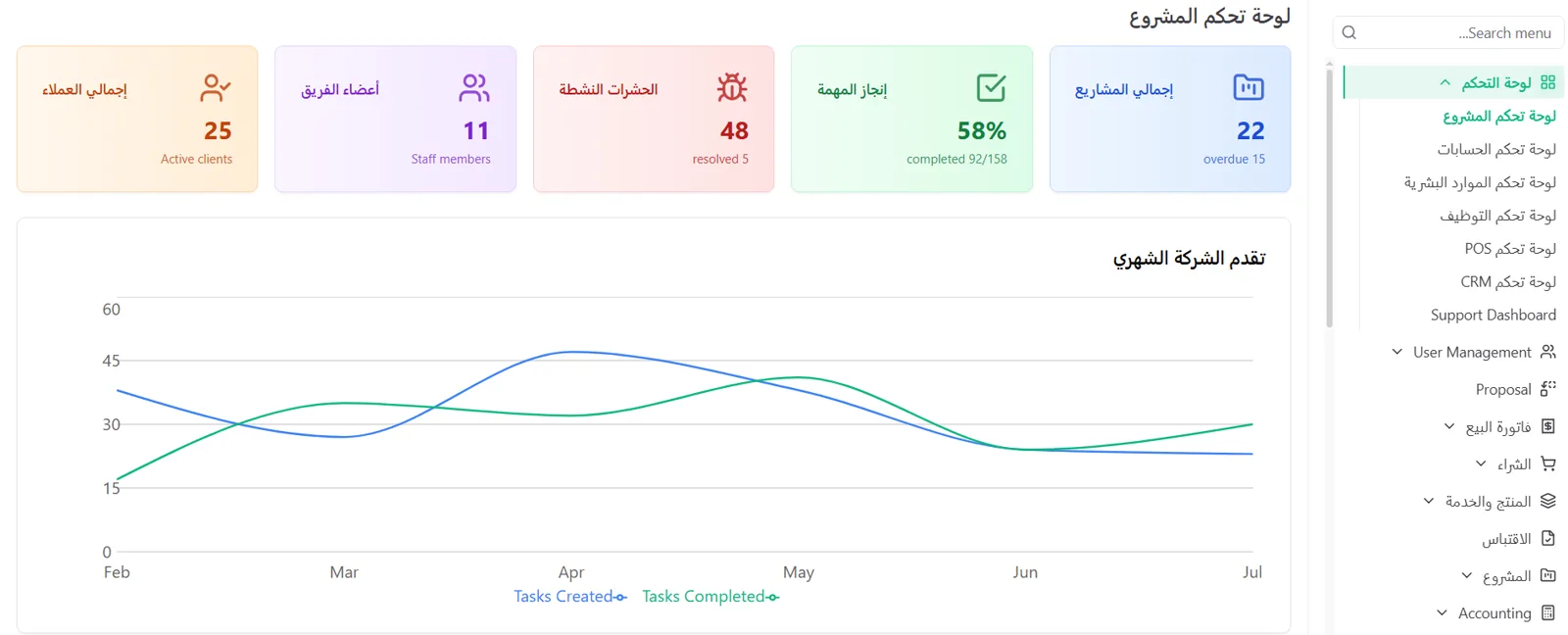
The Al Shohab Al Aliyah ERP system is a complete administrative platform bringing several operational modules together inside a single Arabic RTL control panel, rather than relying on scattered tools. It provides different dashboards by department — projects, accounts, human resources, recruitment, POS, CRM and support — along with management of invoices, purchasing, products, services and contracts, and tracking of performance and tasks through reports and charts. The aim is to unify the company's operations in one connected system that gives management a clear operational view, on a structure that can be customised and scaled.
Multiple departments and systems within a single company.
The need to connect accounts, sales, customers and human resources.
The difficulty of tracking projects, tasks and reporting across separate tools.
The need for a clear operational view for management.
Bringing order to invoices, purchasing, products, services and contracts.
Tracking the performance of teams, customers and technical support.
A central control panel connecting every module.
Project and task management, and accounts and payments management.
Human resources, attendance and leave management.
Managing POS sales and inventory.
Managing CRM customers and deals, and technical support management.
Reports and statistical dashboards, and management of products, services, invoices, purchasing and contracts.
A general operational overview connecting all the system's modules.
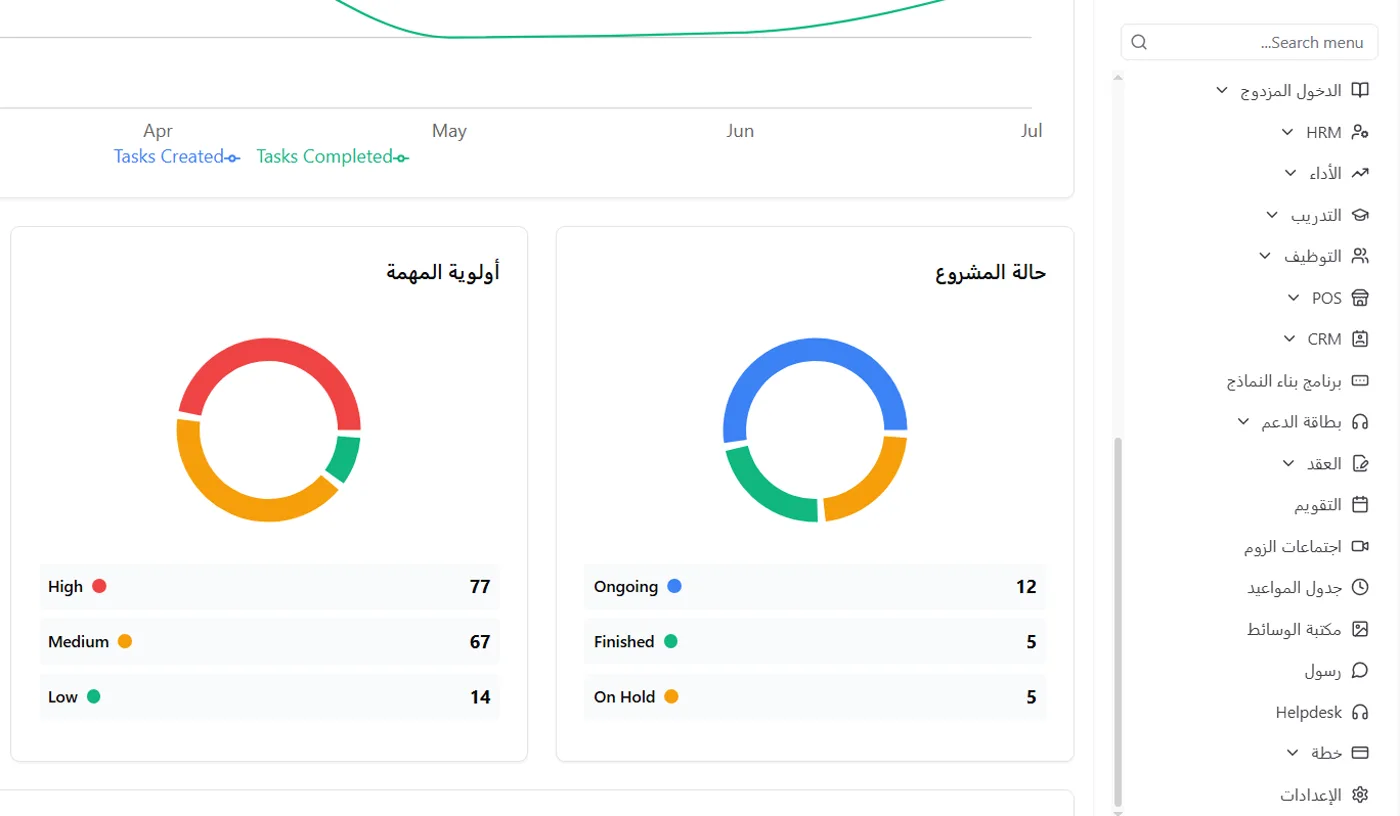
Tracking projects and tasks, their status and their priorities.
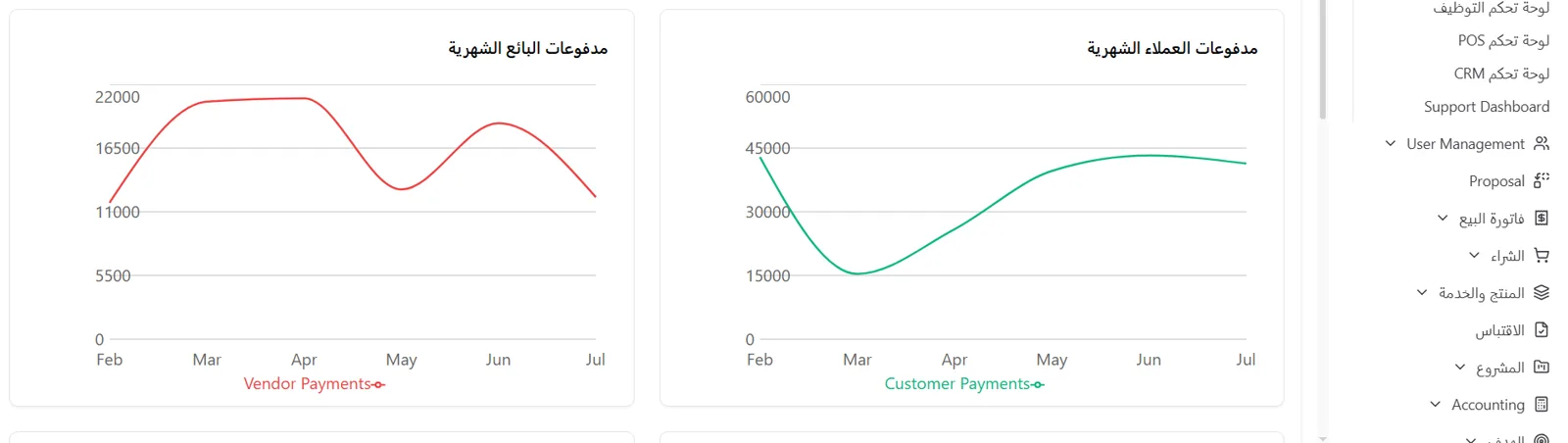
Customer and supplier payments, balances and financial reporting.
Employees, departments and promotions within a single module.
Managing the recruitment process and candidates.
Point of sale and management of sales and inventory.
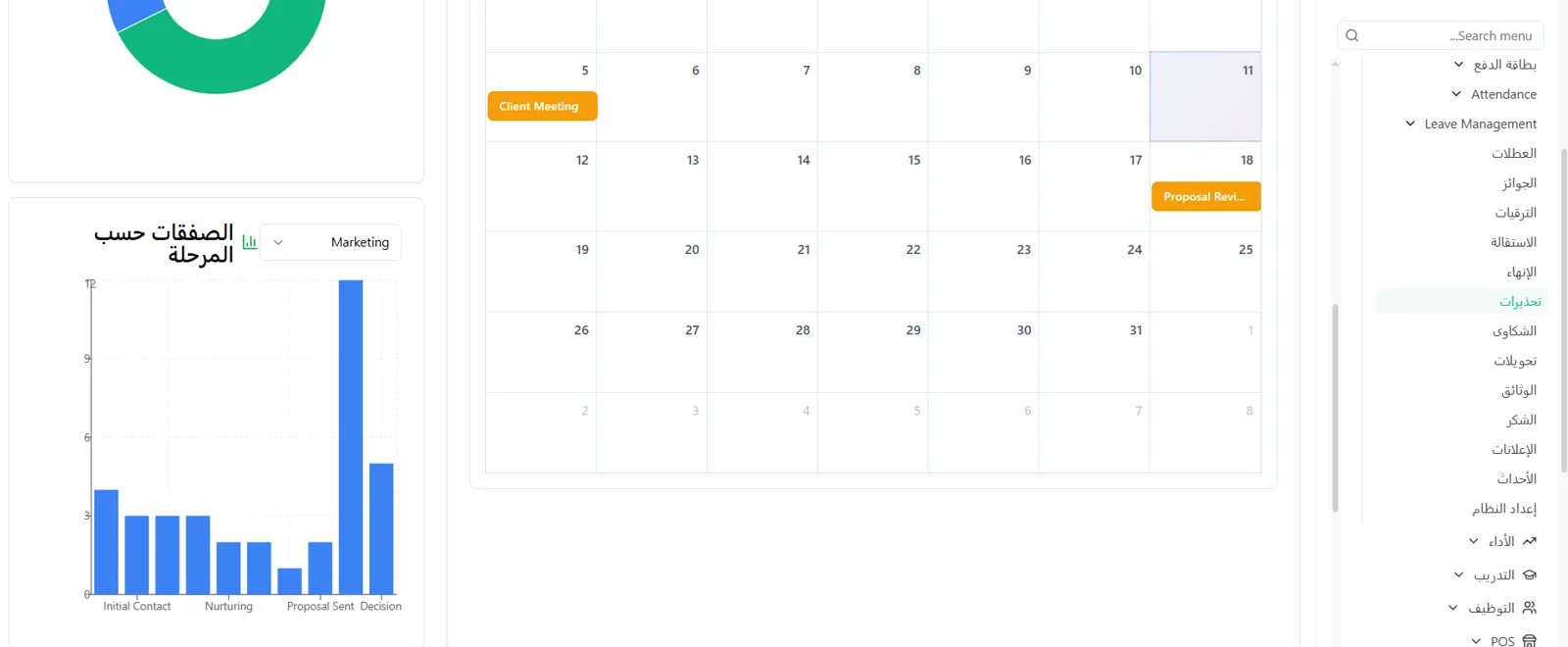
Customers, deals and their stages, and the calendar.
Support tickets and tracking of customer requests.
Issuing sales invoices and linking them to customers and products.
Recording purchases and linking them to suppliers.
Managing the products and services available.
Managing contracts and agreements with customers.
Tracking employee attendance and records.
Leave and holiday requests and approvals.
Managing employee training programmes.
Tracking team performance and metrics.
Charts and statistical dashboards to support decisions.
Scheduling appointments, meetings and events.
The user signs in to the main panel and reviews the overall metrics.
They move to the relevant module: projects, accounts, HR, POS, CRM and so on.
They manage tasks, invoices, customers and employees according to the department.
They follow the tables, charts and reports for each module.
They review the performance, project and sales metrics.
They make better operational decisions based on a unified view.
Connected operational modules inside a single control panel, each department with its own dashboard and tools.
A dashboard for projects and tasks, their status and priorities, and the teams' progress.
Customer and supplier payments, invoices, purchasing and balances.
Employees, attendance, leave, promotions, recruitment and training.
Point of sale and management of sales and inventory.
Customers and deals by stage, plus the calendar and meetings.
Support tickets and tracking of customer requests and enquiries.
Charts and statistical dashboards connecting all the modules.
Unifying operations in one platform instead of scattered tools.
Reducing fragmentation between departments and connecting their data.
Improving management oversight of projects and teams.
Supporting decisions through reports and charts.
Raising the efficiency of customer, team and sales management.
The ability to customise the system to the company's nature and support its growth.
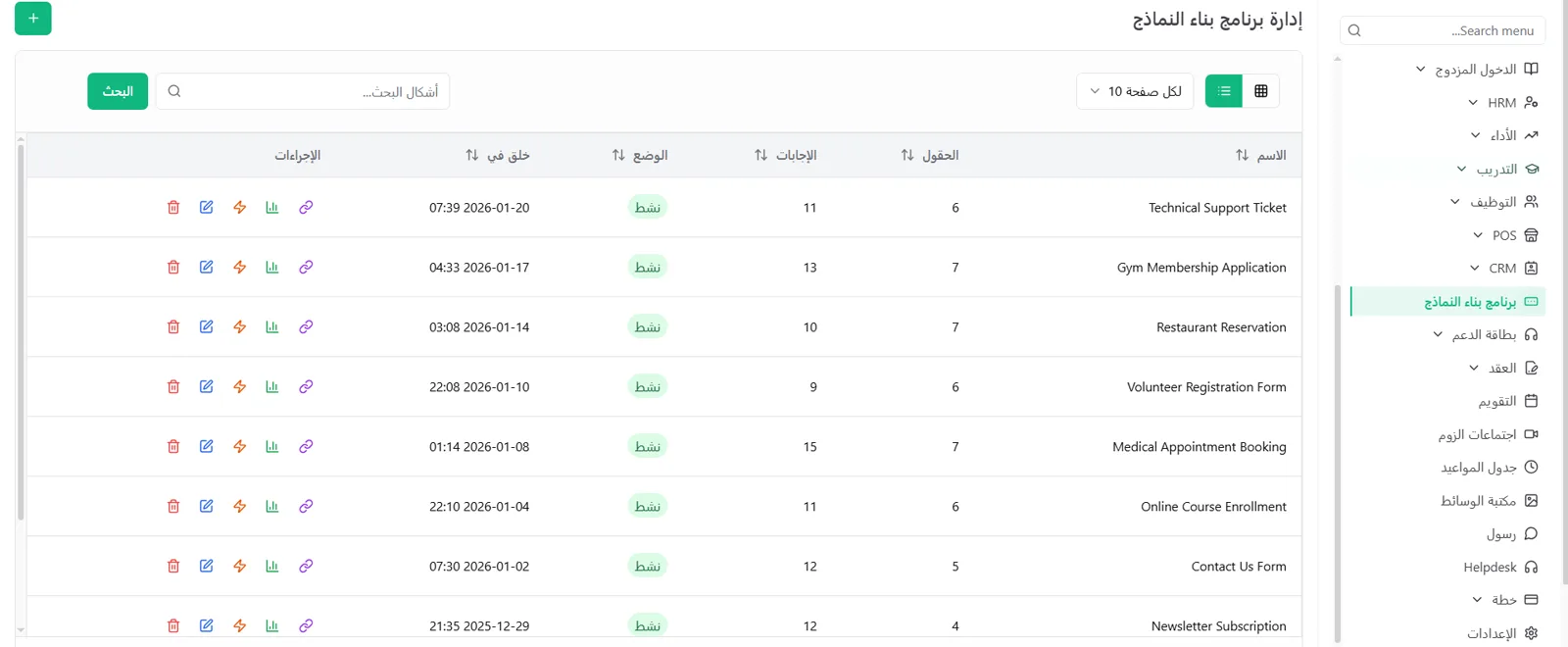
Screenshots of the system's screens, shown only to illustrate the modules. The data displayed is sample data for demonstration and does not represent real figures.
View the system directly, or contact Al Shohab Al Aliyah to build a similar ERP system for your business.
A complete ERP system for companies in Saudi Arabia, connecting accounting, inventory, human resources and customer management. At Al Shohab Al Aliyah we delivered the required modules in phases with data governance. This is an applied case study from the Al Shohab Al Aliyah portfolio; we set out the scope and the components delivered, without undocumented performance figures. Find out about More of our work.

Tell us about your idea and we'll build you a complete digital system — programming, automation and AI, and digital marketing.
These interfaces show tools Saudi businesses can use to organize operational follow-up, communication, and time tracking.
The assistant presents task and attendance summaries and supports project and operational follow-up using system information available under the user’s permissions. It helps the team work with that context.
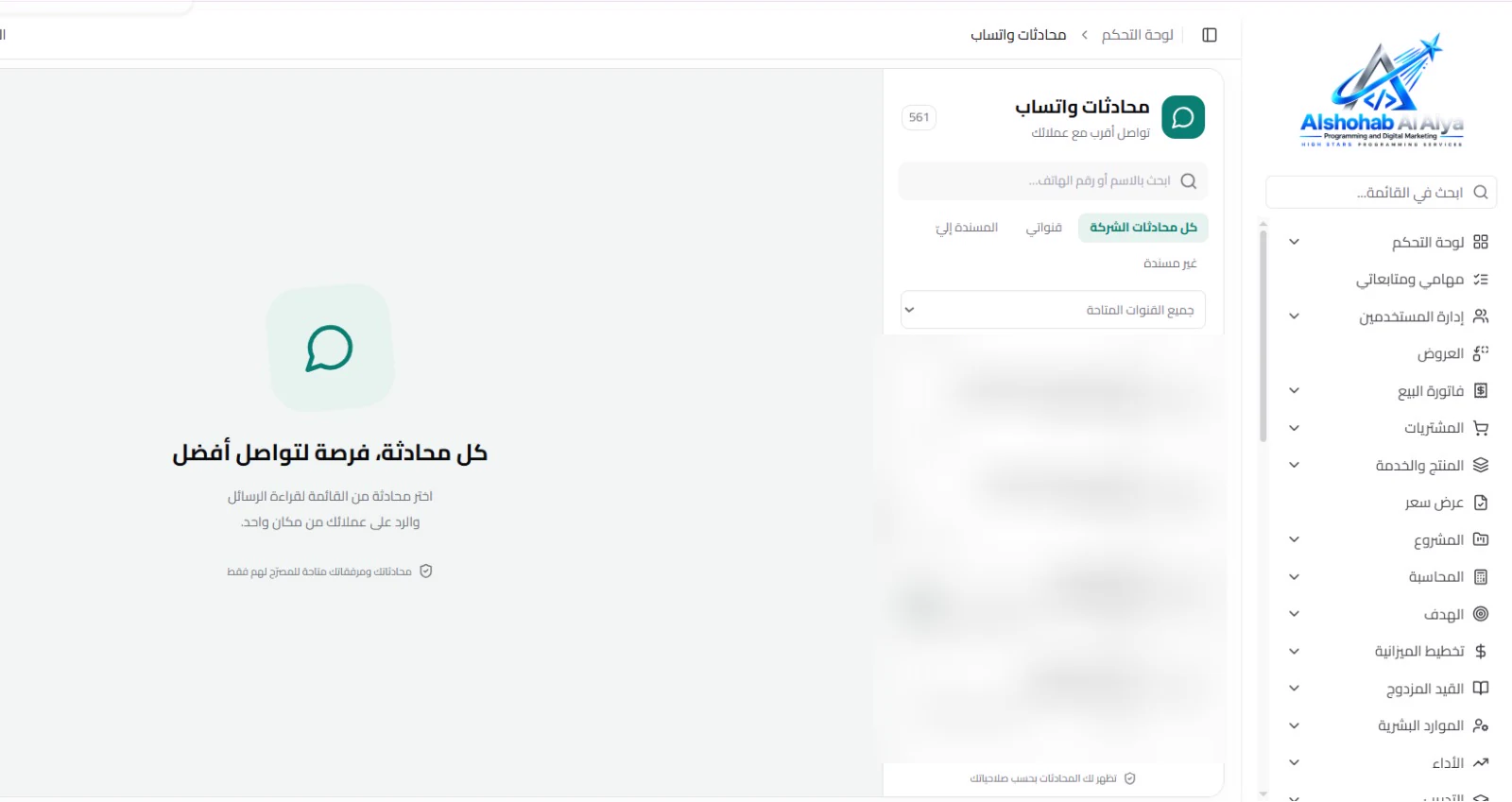
Multiple WhatsApp channels can be connected with employee permissions and conversation assignments. Search and filters help identify who owns each conversation.
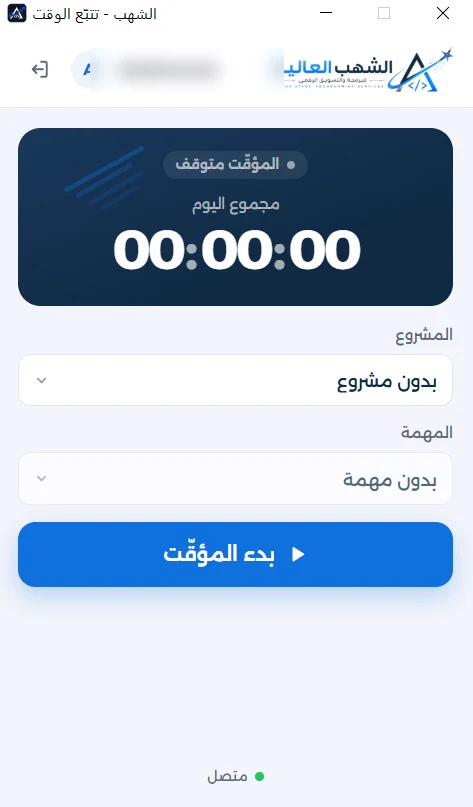
The timer can be linked to a project and task. Its records and summaries support work and attendance follow-up, as well as HR and performance review.
Clear answers about this system and how we can help you build a similar ERP system. Find out about our methodology in Case Studies or take a look at Al Shohab Al Aliyah Services.
The Al Shohab Al Aliyah ERP system is a complete administrative platform bringing several operational modules together in a single Arabic control panel: project management, accounts, human resources, CRM, POS, technical support and reporting — rather than relying on scattered tools.
A CRM focuses on managing customers and deals, whereas an ERP combines CRM with accounts, human resources, projects, sales, POS, purchasing, contracts and reporting in one connected system serving the company's entire operation.
Yes. The required modules can be enabled and projects, accounts, human resources, products, services, reporting and settings all customised to suit the company's business and size, on a structure that can scale.
The system provides a dashboard for managing projects and tasks and tracking their status and priorities, and an accounts dashboard tracking customer and supplier payments, invoices and purchasing, with reports and charts connecting the operations.
Yes. The system includes a human resources (HRM) module covering employees, attendance, leave, promotions, recruitment, training and performance, as shown in the panel's menus.
Yes. The system includes a POS module for sales and inventory and a CRM module for customers and deals, and these can be connected to accounts, invoices and reporting within the one system.
Contact Al Shohab Al Aliyah through the contact page or on WhatsApp, and we start with a session to understand your requirement, decide which modules are needed, and set a clear plan for building an ERP system that suits your business.